Deramatophilosis in Draught and Dairy Cattle in Tamil Nadu Delta Districts of India- Juniper Publishers
JUNIPER PUBLISHERS-OPEN ACCESS JOURNAL OF REVIEWS & RESEARCH
Deramatophilosis in Draught and Dairy Cattle in Tamil Nadu Delta Districts of India
Authored by S Krishna Kumar
Abstract
Chronic dermatitis caused by Dermatophilosis in dairy
and drought animals were studied in delta districts of Tamilnadu.
Dermatophilosis is a contagious zoonotic skin disease caused by Dermatophilus congolensis
with wide host range and most commonly affects cattle, sheep and horse.
The disease is characterized by exudative dermatitis with scab
formation. Factors such as prolonged wetting by rain, high humidity,
high temperature, mechanical injury to the skin, concurrent disease,
stress and tick infestation that reduce or permeate the natural barrier
of the integument influence the development, prevalence, seasonal
incidence and transmission of Dermatophilosis. A cross sectional study
on prevalence of Deramtophilosis was carried out and epidemiologic risk
factors like age, breed, sex and seasonal coditions were corelated with
the prevalence of Dermatophilosis. This study concludes that winter
season, higher age group, female and jersey cross bred will be the risk
factors for Dermatophilosis prevalence and oxytetracycline is the chioce
of antibiotic for clinical management.
Introduction
Agrarian economy of the detal districts of Tamilnadu
remain heavily depended on draught cattle and livestock. Dairy animals
remain bread winners for the agriculture labours and the landless
people. The economic value of these cattle were observed to be subvalued
due to the presense of damaging lesions in the skin due to
Dermatophilosis (also known as Streptothrichosis). Dermatophilosis
caused by the bacterium Dermatophilus congolensis, is an
exudative, pustular dermatitis that mainly affects cattle, sheep and
horses, but also goats, dogs and cats, many wild mammals, reptiles
occasionally, humans also affected
[1] . The clinical picture includes matting of the
hair or wool, scab and crust formation and generalized massive crust
formation in chronic cases which leads to loss of hair and even local
loss of the upper skin layers predisposing to secondary infections.
Several factors like mechanical injury to the skin, rainfall, tick
infestation, concurrent diseases and stress are involved in the
pathogenesis of Dermatophilosis and claimed to be a major predisposing
factor in the epidemiology of Dermatophilosis [2]. Moisture facilitates
release of zoospores from preexisting lesions and theiy subsequently
penetrates the epidermis and establishments new infection [3]. Diagnosis
made based on clinical appearance of the lesion and demonstrating the
causal organism from the lesions beneath the scabs [4]. Confirmatory
diagnosis of the disease may be achieved by culturing and identification
of the pathogen on blood agar bacteriological media.
Materials and Methods
The study area covered the delta regions of Tamilnadu
with the Thanjavur district as the main target. Clinical samples of
dermatological lesions were collected with epidemiological data and
subjected to laboratory examinations. The distribution of lesions on
affected animals were recorded. The selected samples were processed for
identification of Dermatophilosis.
Supected skin samples of affected area were collected
and placed in the petridishes with normal slaine for over night. Deep
impression smear was collected form the soaked materials [5]. The smears
were stainined with Giemsa staining and susequently confirmed in Sheep
blood agar [6].
Results
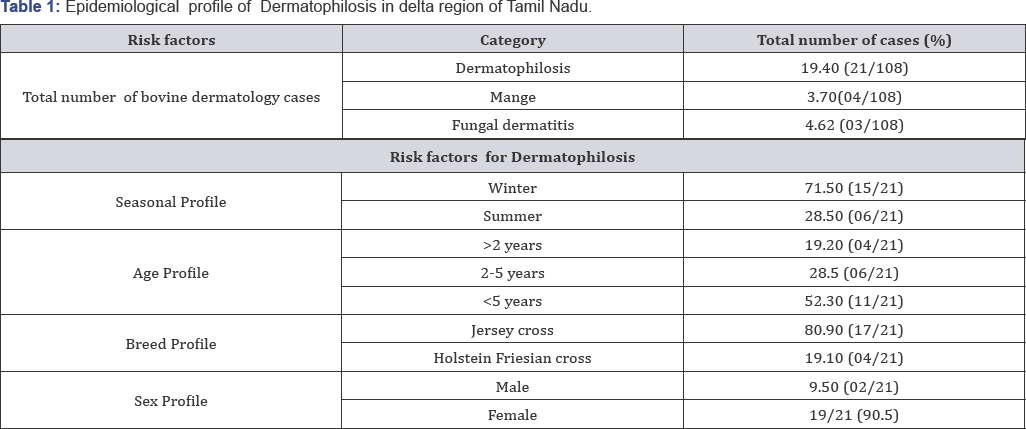
Detal districts of Tamilnadu has recorded with higer prevalnce of Dermatophilosis in dairy cattle. A sum of 108 cattle were screened for various dermatological disorders and 28 cases were found to be afflected with Dermatophilosis (Table 1). Winter season (71.5%) had a higher prevalence than the summer (28.5%). All age groups in both male and females were affected. Higher age group (<5 years) showed 52.3% morbidity than younger age group. Females were found to have a higher rate (90.5%) of infection than male (9.5%).
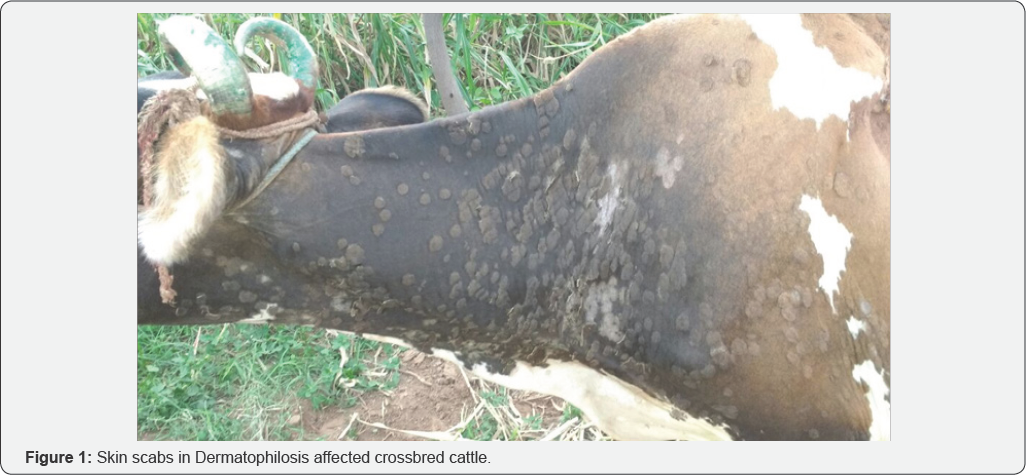
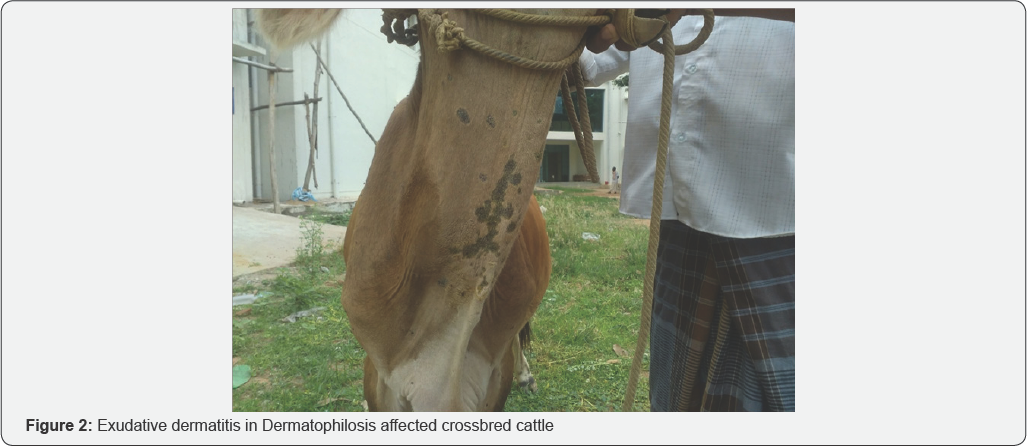
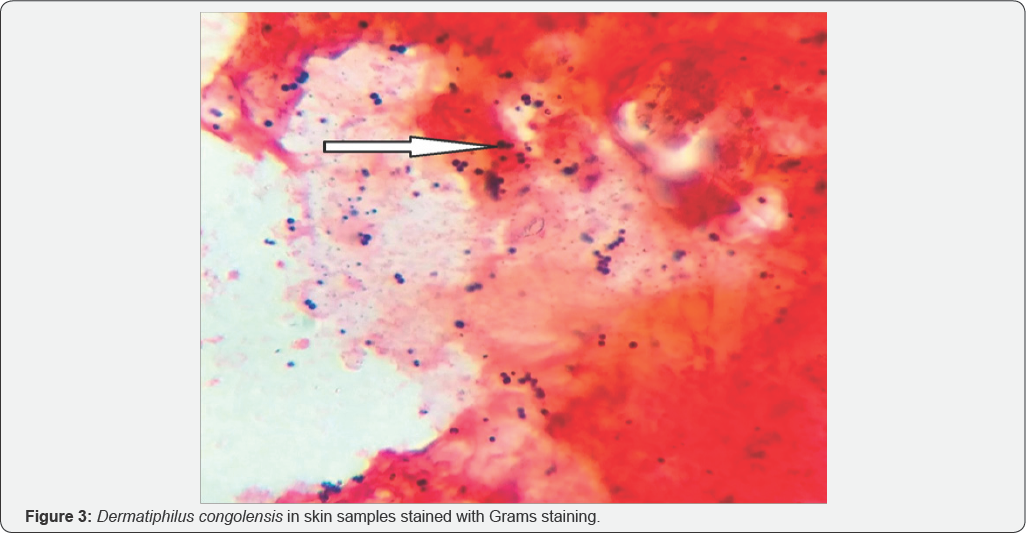
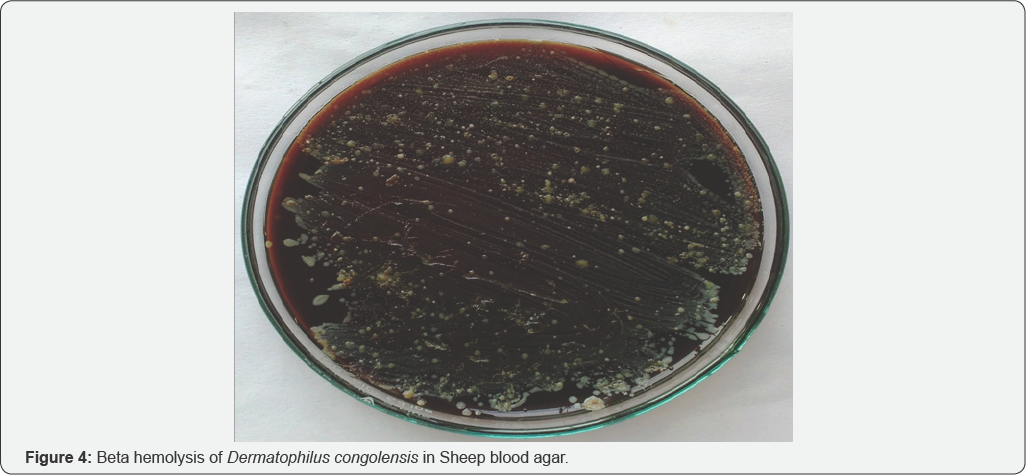
Out of 21 dermatiphilosis posititve animals 17 (80.9%) were Jersey crossbred cows and (19.1%) were Holsteinfresian crossbred. Typically clinical presentation included the formation of dense scabs on the skin (Figure 1) especially moist lesions with thickened, folded skin in areas like neck, udder and perineum was observed. After a time gap, dry scab peeled off and dry/wet exudative lesions were seen (Figure 2). Severe itching, hair loss, reduction in milk production was common among dairy animals. The processed samples were shown gram positive cocci in a specified manner was noticed (Figure 3). The strains of Dermatophilus congolensis grew on blood agar with washed sheep erythrocytes with marked total hemolysis and gave a significant synergistic effect of a characteristic shape (Figure 4).
Discussion
This reaearch work targets the dairy cow and drought
animals to ascertain the prevalence of dermatophilosis in delta
region.Clinical samples like dry scab and wet impression smear were
coleected and sujected to bacteriological examination. Higher incidence
of dermatophilosis recorded during winter because of prolonged wetting
makes break in the skin to establish the infection and multiplication of
the organism in the epidermis and concomitant increase in tick and
insect infestation [5]. Humidity, high ambient temperature,
ectoparasites, carrier animals, malnutrition, intense rainfalls and
mechanical traumas are important factors which was recorded by Andrew AH
[7]. All theses factors are more prevalent in delta districts of Tamil
Nadu, particularly in Thanjavur. During the monsoon season, water flow
in the irrigation canals augments the disease prevalence, as majority of
these cases were obsereved during such times. Dairy and draught cattle
of Thanjavur districts were observed to have an epidemic pattern of skin
lesions particularly during rainy seasons and during the periods where
in heavy water flow is present in irrigation channels across
agricultural fields.
These bacteria are usually found under the skin
surfaces and under favorable environmental risk factors like relative
humidity and rain fall, these organism grow well and produce clinical
disease. Ecologically Thanjavur, Nagapattinam and Tiruvarur delta
districts of Tamil Nadu are located in sea shore area and have high
humidity thought the year These districts also experiences abnormal rain
fall during monsoon seasons [8]. Because of the prevalent community or
group grazing pattern, practised by livestock keepers in these areas it
paves way for easy transmission to other animals. Eventhough some of the
animals showed self limiting pattern, most of the animals had anorexia,
loss of milk yield and poor skin and coat.Eventhough most of the
researchers found tick infestation along with Dermatophilosis [3] but
this study was not witnessed with tick infestation.
Most of the skin lesions were seen on the rump and
back in dairy cows and drought animals probably due to the introduction
of infection through minor skin abrasions caused by mounting, other
penetrating lesions caused by yolk respectively. Typical clinical
symptoms in this study consists of circular, dome shaped scab about
3-9cm in diameter may be due to yellowish exudates, leaving a row,
bleeding epidermis and normal skin surface has been disrupted and
activated zoospores gain access to the epidermis, infection can develop
and the zoospores are apparently attracted to the low carbon dioxide
[6]. Pin point colonies surrounded by small zones beta hemolysis are
evident after twenty four hour incubation at 370C was noiced as noticed
[2].
Dermatiphilosis cases were successfully treated with
Oxytetracycline with parental Oxytetracycline / Strepto- peneicillin at
standard doses with external application of sulphur ointment and feed
supplements had helped in better recovery from the disease as
recommended by Susan EA [5].
Prevention and control of dermatophilosis is by
isolation and treatment of affected animals, maintaining good plan of
nutrition with mineral supplementations and avoiding community / group
grazing practices.
For more Open Access Journals in Juniper Publishers please
click on: https://juniperpublishers.com
For more articles
in Open Access Journal of
Reviews & Research please click on:
https://juniperpublishers.com/arr/index.php
https://juniperpublishers.com/arr/index.php
To know more
about Peer
Review Journal of Reviews & Research click on:


Comments
Post a Comment